Case study: Measurement of wax firmness according to ASTM D937-92

PRINCIPLE OF THE TEST
The objective of the test is to evaluate the hardness or firmness of the wax using a conical probe according to the standard method ASTM D937-92.
CONTEXT
Waxes are organic products produced synthetically and naturally. They generally tend to be softer at higher temperatures and harder at lower (cooler) temperatures. Therefore, the "stickiness" and hardness of some waxes will depend on the temperature. Hard waxes are less sticky and therefore adhesive. By varying the hardness of the wax using different grades of wax, the adhesive nature or traction of the wax can be changed.
Many cosmetic, medical and personal care products contain waxes. The ability of waxes to produce a good gloss, the firmness of the product, as well as their molding properties make them complementary to the final texture of the product. Measuring the hardness (firmness) of a wax determines whether a wax of interest will be suitable for a particular product to produce the desired properties.
Standard Method D937-92 uses a penetrometer to determine the depth of penetration of a standard cone under defined conditions. The CT3 Texture Analyzer adopted this standard method using the specified parameters as well as alternative measurement methods such as determining the force to penetrate a specified distance. Cone angles can range from 15 to 90 °.
METHOD
Equipment: CT3 with 4.5 kg load cell
30 ° conical probe
TexturePro CT software
Settings:
Type of test: Voltage
Type of pre-test: 1.0 mm / s
Test speed: 2.0 mm / s
Post-test speed: 2.0 mm / s
Target type: Distance
Target value: 30 mm
Trigger force: 20 grams
Note: It is recommended that the pre-test speed be the same or slower than the test speed for accurate trigger detection; for example, a test speed of 2 mm / s will require a pre-test speed ≤ 2 mm / s.
Very soft samples will not be able to achieve a force of 150 g. In such circumstances, the softer sample should be tested first to determine if the procedure works. An appropriate method may need to be developed.
SAMPLE PREPARATION
In the standard method, the sample is melted at 82 ° C and poured into a standard container. The sample is cooled to room temperature for 16-18 hours (refer to the ASTM standard method for more information). Another method (also used in this test) is to test samples directly from their original containers. If you use this method, the dimensions of the chosen container should be reported and applied to subsequent testing. The surface of the sample must remain intact and unaltered as this may affect the result.
PROCEDURE
1. Attach the conical probe to the force transducer.
2. Align the sample centrally under the conical probe and 15mm from the edge of the container.
3. Start the penetration test.
4. As the probe withdraws from the sample, hold the container firmly to prevent it from lifting.
5. When proceeding to the next test, wipe the conical probe with a clean, dry cloth to remove all traces of wax.
Note: The temperature of the cone should also be at room temperature before starting the test.
This test measures the distance required to generate a load of 150g. An alternative method can also be used when the force required to penetrate a specified distance is measured.
RESULTS
The following is a typical TexturePro CT plot. The graph shows the wax hardness of a petroleum jelly using a conical probe.
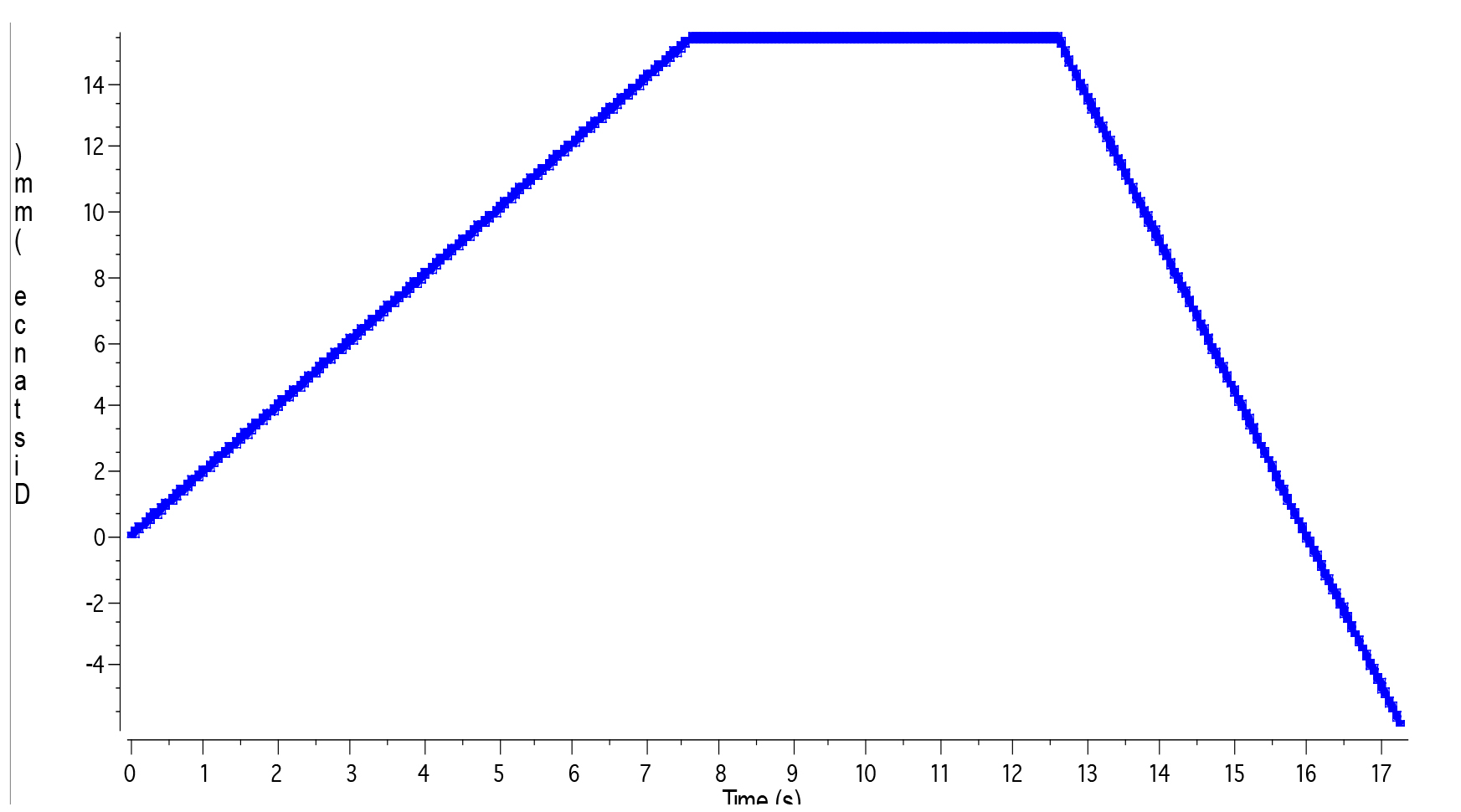
The graph in Figure I shows the hardness of petroleum jelly measured from a 50 ml, 3.5 x 5.0 cm.
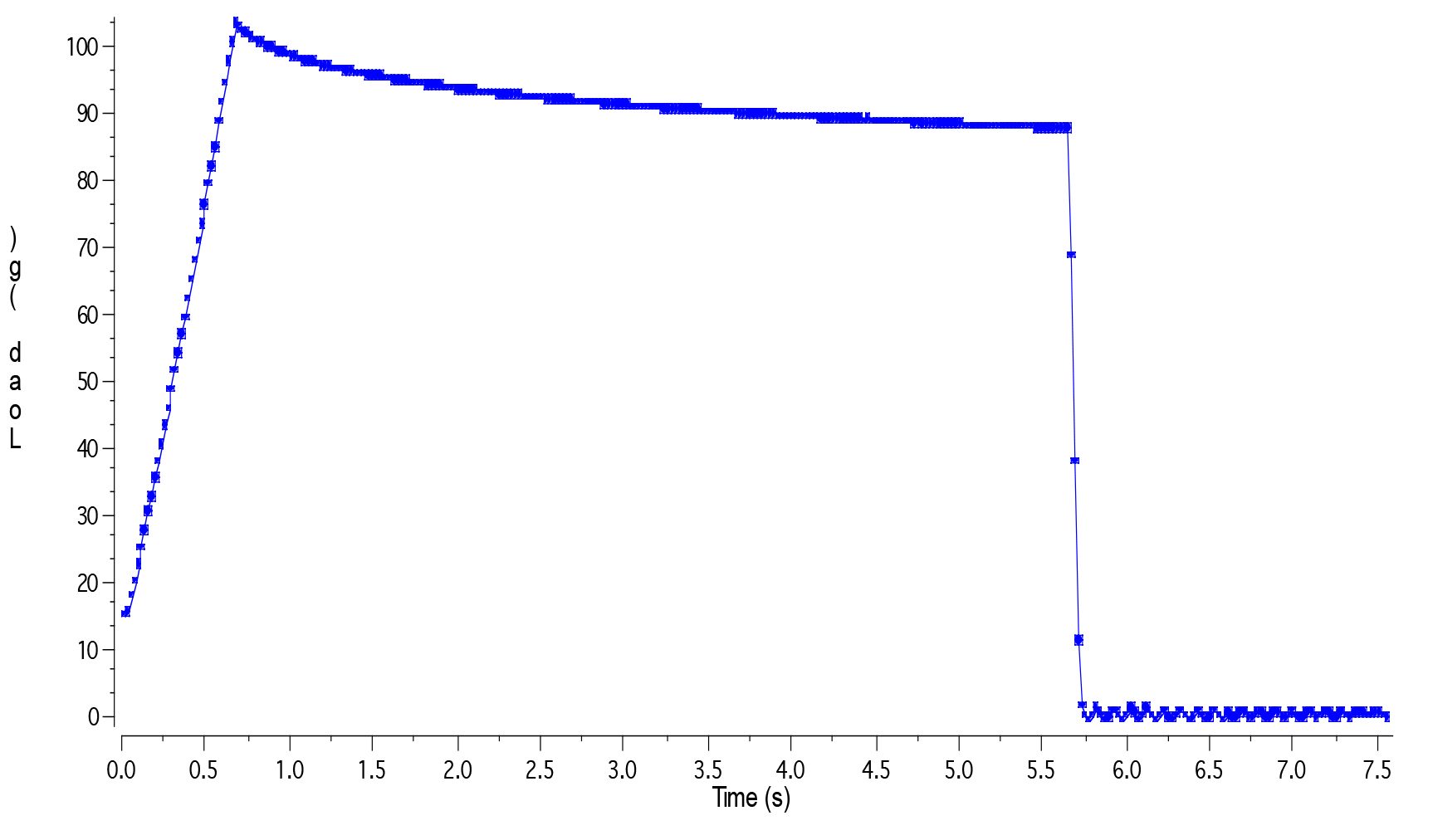
The graph in Figure II shows the load versus time for the hardness of petroleum jelly.
The graph in Figure II shows the load versus time for the hardness of petroleum jelly.
OBSERVATIONS
When a trigger force of 5g has been reached, the probe will penetrate the sample until a force of 150g is reached. This is followed by a 5 second hold time before the probe withdraws from the sample at a post-test rate of 10 mm / s. The penetration distance depends on the hardness of the sample. A large penetration distance will indicate a soft sample while a small penetration distance will indicate a harder sample. The test is useful for comparing the hardness of different waxes to determine the choice of wax for a particular product.
The table below shows the average values for a petroleum jelly tested at several sites.
Deformation to hardness
(mm) | Hardness of the work performed
(mJ) |
| 17.05 ± 2.4 | 9.74 ± 1.22 |