Yoghurt pot lid removal test

PRINCIPLE OF THE TEST
Assessment of the peel strength of a sheet on a yogurt bottle using a General Peel Jig (TA-GPJ).
CONTEXT
Peel tests measure the strength of adhesion or bond between two materials. Typical examples include packaging materials, laminate surface coatings, films and supports, among others. A peel test is performed when a load or tensile force is applied to the materials under study in one of the three ways listed below:
(1) Pull flexible material away from non-flexible material which are both held vertically forming a 180o peel.
(2) Pull flexible material (positioned vertically) away from non-flexible material (positioned horizontally) to form a 90o peel.
(3) Pull two flexible materials axially from each other. This is called the T-peel test.
While the peel test techniques listed above may require a variety of test fixtures and handles, the data analysis is the same, requiring the load values to be averaged while peeling over a set period of time. The test performed here is a 90o peel test using a General Peel Jig (TA-GPJ). In preparation for the test, the flexible material (backing, film, etc.) is inserted (or partially peeled off before insertion) on the upper handle and the product (the non-flexible material from which the strength of the seal will be measured, e.g. example, bottle) is attached to the luminaire using the rubber support and supported at its base by the adjustable screws. When the instrument arm drives the upper handle in the pulling direction, the seal is peeled away from the product. The force required to peel the flexible material from the product is a direct measure of the bond strength. In quality control, it is important to perform a peel test in order to assess the integrity of the seal and the safety of the product. Testing also ensures proper functioning of the adhesive seal (i.e. the seal is tight enough to keep the product sterile or protected, but easy enough to peel without causing spills or inconsistencies in peel strength. ).
METHOD
Equipment:
Instruments: CTX with 5 kg load cell instrument
Accessory: TA-GPJ- General peeling jig
Software: Texture Pro software
Settings :
Type of test: Voltage
Pre-test speed: 1.0 mm / s
Test speed: 1.0 mm / s
Post-test speed: 1.0 mm / s
Target type: Distance
Target value: 32.0 mm
Trigger force: 5 grams
SAMPLE PREPARATION
Condition samples to temperature test conditions.
PROCEDURE
- Attach the probe rod connector to the instrument
- Slide the retaining nut and spring into the slot at the base of the instrument and move it toward the center of the instrument base.
- Likewise, slide the universal peel holder into the slot at the base of the instrument and move the holder towards the center of the instrument base.
- Note: The position of the general peel jig and fixing nut and spring depends on the tilt angle of the platform. Therefore, for a 0 degree angle, the fixture is positioned towards the center of the base of the instrument whereas a 45 and 90 degree peel test would require the fixture to be positioned lower on the base of the instrument. instrument. These positions ensure that the chain connecting the clamps (holding the sample) to the probe shaft connector is parallel and not tilted.
- Lift the fixture backing plate using the screws on the back of the fixture. This will provide room to lock the fixture in position.
- Align the hole in the general peel device with the hole in the nut and spring in the device.
- Using the screw and Allen key provided, lock the general peeler in position.
- Place the sample on the backing plate and using the small screws on the front of the fixture, tighten the sample.
- Partially peel off the protective cover and insert this free end into the handle and tighten with the screws. Make sure that the protective cover is inserted along the entire length of the handles. This will ensure a firm grip.
- Lower the instrument arm so that the handle can be connected via the thread to the connector on the probe shaft.
- Wrap the thread of the handle around the probe rod connector screw and tighten with the screw.
- Raise the instrument arm in 1mm increments until the protective cover, handles, and thread are kept straight and perpendicular to the edge of the bottle with no play on the thread.
- Start the test
RESULTS
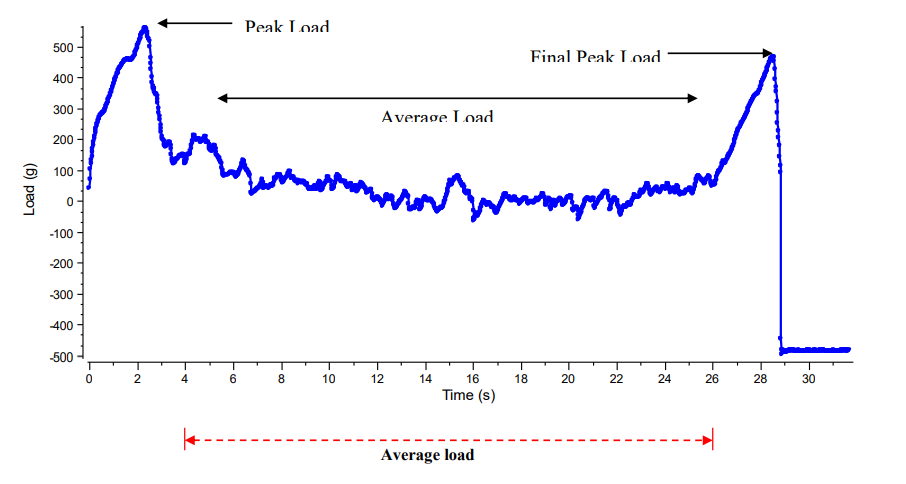
Figure I The Peel Strength of a Seal from a Bottle of Yogurt Using a General Peel Jig (TA-GPJ)
The two peak values seen in the graph are a measure of the force required to break the rim-seal contact at the start of peel and at the end of the peel. The plateau on the graph is the force required to continue peeling and is calculated as the average load (in this case calculated in the time scale from 4 seconds to 26 seconds). Large fluctuations on the graph would indicate inconsistencies in peel strength.
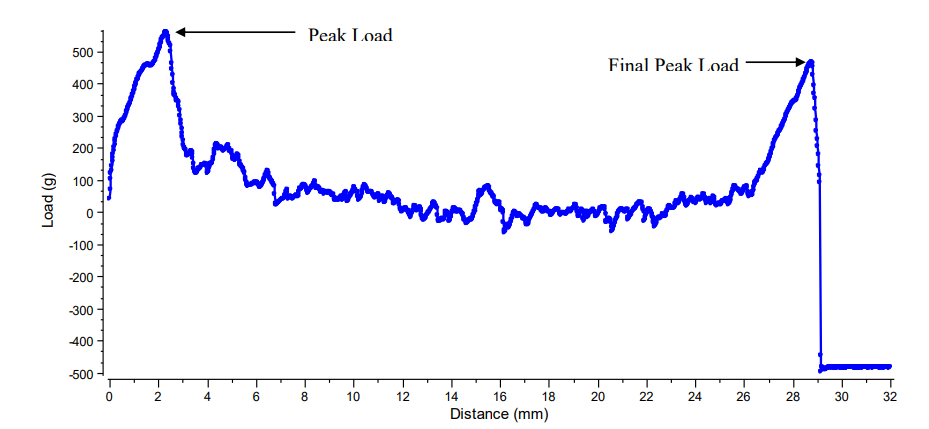
Figure II The load versus distance for the peel strength of a seal from a bottle of yogurt.
This graph shows the maximum load and final load as well as the distance traveled throughout the peeling process.
OBSERVATIONS
When a force of 5 g has been reached in the pulling direction, the handles pull on the protective cover of the bottle and the force increases rapidly as the bonding force of the seal between the edge of the bottle and the lid. resists applied force. . When the tension load exceeds the bonding force of the joint, peeling begins. This is represented by the first peak on the graph and by the sudden drop in load values. As the peeling continues, the graph stabilizes. This region of the graph represents the force required to continue peeling. As the final seal section is peeled off, the tension load increases to form a second peak followed by a drop in load values when the lid is completely separated from the bottle. This second peak represents the force required to separate the lid from the edge of the bottle.
A peel test will indicate potential problems that may arise from the quality of the seal and therefore can be used to optimize the strength of the seal. When the peak force is very high at the start of the test, followed by a rapid drop in force, this may indicate the possibility of low viscosity material spills when the user attempts to peel the gasket off a cover. Additionally, large fluctuations in force to continue peeling will also indicate poor seal quality with inconsistencies in peel strength and spillage also likely to occur. The advantage of this peel test is that it can be extended to all types of rectangular, oval and circular containers and that it is quick to perform.
The table below summarizes the results:
| | Peak load (g) | Average load (g) | Work performed (mJ) |
| Operculum | 561 | 35.7 | 14.43
|