


 AMETEK BROOKFIELD
 ASCOTT ANALYTICAL EQUIPMENT LTD
 ATP ENGINEERING BV
 BINDER GmbH
 BUCKLEYS (UVRAL) LTD
 COATMASTER
 DAKOTA ULTRASONICS
 DEFELSKO CORPORATION
 FORMAT MESSTECHNIK GmbH
 HACH LANGE
 HANGON
 HANNA INSTRUMENTS FRANCE
 HILDEBRAND
 KERN & SOHN GmbH
 LABOMAT ESSOR
 LAUDA
LAUDA
 LENETA COMPANY
 MITUTOYO FRANCE
 Q-LAB CORPORATION
 RHOPOINT INSTRUMENTS
 RK PRINT COAT INSTRUMENTS Ltd
 SIGMUND LINDNER GmbH
 TABER INDUSTRIES
 TAYLOR HOBSON LIMITED
 TESTO
TESTO
 TQC BV
 VEOLIA WATER STI
 VERIVIDE
 WALLACE
 X-RITE EUROPE GMBH

Chocolate is a tasty treat, frequently used in candies, icings, pastry fillings, and many other desserts.
Instrument: Viscometer or rheometer
Torque range: HA
Spindle: SC4-27 Spindle with SC4-13RPY
Sample chamber accessories: Small sample adapter,
TC-550SD Programmable temperature
Speed dubain: 5, 10, 20, 50 and 100 RPM
Temperature: 40 ° C Test Method
The Small Sample Adapter ™ can be used with various Brookfield viscometers or rheometers. In our example, we used a Brookfield HADV3T, with RheocalcT ™ software for automated instrument control and data acquisition. Our test temperature of 40 ° C was maintained by connecting the Small Sample Adapter ™ water jacket to a Brookfield TC-550SD programmable refrigerated bath. Representative data from the analyzes are shown in Figures 1 and 2. The
Figure 1 demonstrates that the viscosity of dark chocolate decreases as the shear rate increases. This behavior is known as "shearing".
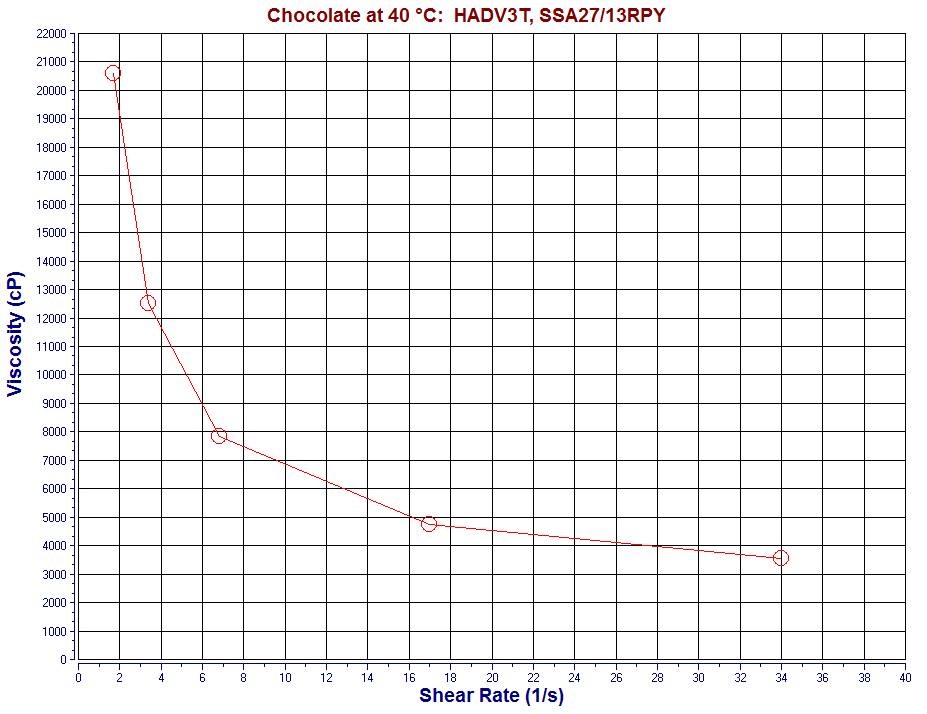 Figure 1: Viscosity of dark chocolate at 40 ° C
Figure 2 illustrates a good fit of the Casson NCA / CMA model to the raw data. The “CoF”, the confidence of adjustment (%), from raw data to fitted curve, is close to 100 %, which means a great fit. As shown in Figure 2, generated in RheocalcT ™, the plastic viscosity is 1241 cP and the yield strength is 129 dyn / cm2. The chocolate has been tested to specifications provided by the National Confectioners Association and the Chocolate Manufacturers Association.
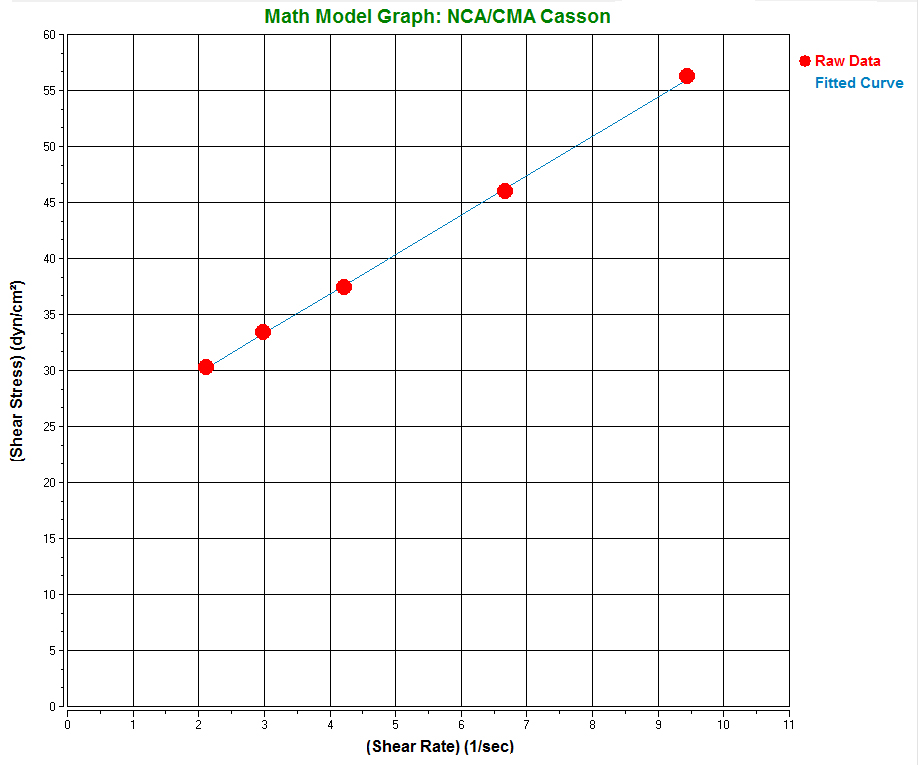
Figure 2: NCA / CMA Casson graph of chocolate rheology at 40 ° C
Some chocolates are tested at different shear rates, to ensure data to scale. 1, 2.5, 5, 10, 20 and 50 rpm are suitable in some cases, for example.
MacMichael Degrees values can be calculated from Brookfield data at 20 rpm. This is discussed in our AR-79 reprint article. The couple, %, read at 20 rpm, obtained by measuring chocolate with the HA spring torque range instrument using pin SC4-27 in chamber SC4-13R or SC4-13RP, is multiplied by 3.40. The above example has a torque of 31.4 % at 20 rpm - corresponding to a viscosity of 7850 cP at a shear rate of 6.8 s-1 or 6.8 1 / s. Therefore, (31.4 %) x (3.40) = 106.8 MacMichael degrees.
How many hours in a Q-SUN Xenon Test Chamber or a QUV Weathering Tester equals a year of outdoor exposure?
Case study: Rheological properties of powder preparations for sauces
Can the Q-SUN Run “Solar Radiation” Tests Found in Environmental Testing Standards ?
How to take care of your coating thickness gauge?
Circular Taber Abraser: Standards Taber circular abrasimeters references: Taber 5135, Taber 5155, Taber 1700, Taber 1750
Case study: Measurement of consistency of tofu or curd
Descriptions, ranges and measurement parameters of Brookfield viscometers and accessories


