


 AMETEK BROOKFIELD
 ASCOTT ANALYTICAL EQUIPMENT LTD
 ATP ENGINEERING BV
 BINDER GmbH
 BUCKLEYS (UVRAL) LTD
 COATMASTER
 DAKOTA ULTRASONICS
 DEFELSKO CORPORATION
 FORMAT MESSTECHNIK GmbH
 HACH LANGE
 HANGON
 HANNA INSTRUMENTS FRANCE
 HILDEBRAND
 KERN & SOHN GmbH
 LABOMAT ESSOR
 LAUDA
LAUDA
 LENETA COMPANY
 MITUTOYO FRANCE
 Q-LAB CORPORATION
 RHOPOINT INSTRUMENTS
 RK PRINT COAT INSTRUMENTS Ltd
 SIGMUND LINDNER GmbH
 TABER INDUSTRIES
 TAYLOR HOBSON LIMITED
 TESTO
TESTO
 TQC BV
 VEOLIA WATER STI
 VERIVIDE
 WALLACE
 X-RITE EUROPE GMBH

Corn oil is used in cooking, also as salad oil and in the manufacture of margarine.
Test equipment
Instrument: Viscometer or rheometer
Torque range: LV
Pin: YULA-15E
Accessories: Enhanced UL Adapter,
TC-550AP
Programmable wash speed: 2, 4, 6, 8 and 10 RPM
The Enhanced UL Adapter ™ can be used with various Brookfield viscometers or rheometers. In our example, we used a Brookfield DV3TLV rheometer with Rheocalc ™ software for automated instrument control and data acquisition. Our test temperature of 25 ° C was maintained by direct immersion of the sample chamber of the enhanced UL adapter in a TC-550AP programmable refrigerated bath. Representative data from the analyzes in Figure 1 shows a relatively constant viscosity at 25 ° C (55 cP to 52 cP) over the speed range tested.
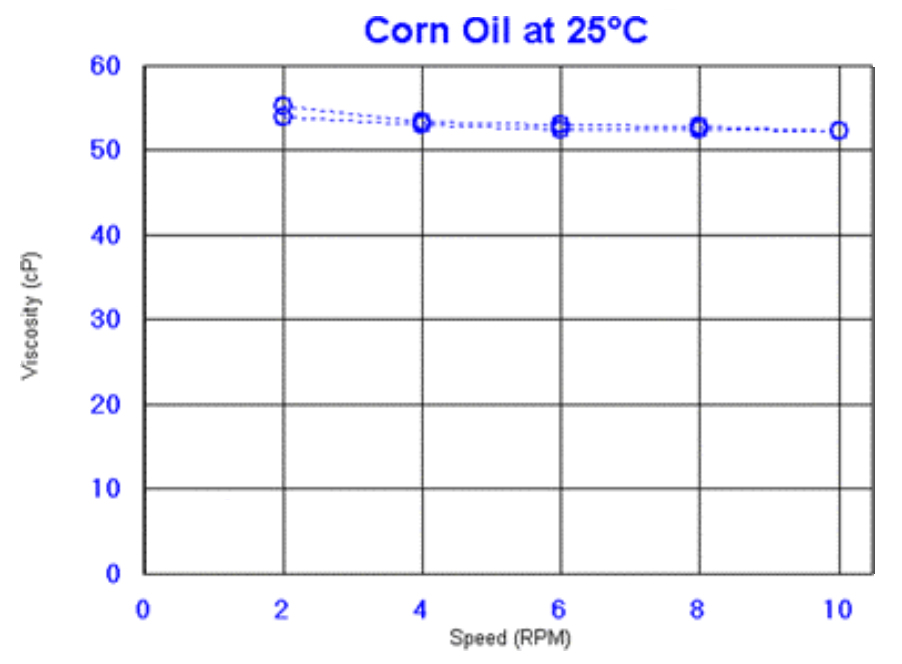
Figure 1: Viscosity as a function of the speed of rotation
Test equipment
Instrument: Viscometer or rheometer
Torque range: LV
Pin: LV-1
Accessories: TC-550AP
Programmable bath speed: 25, 50, 75 and 100 rpm
We used a Brookfield DV3TLV rheometer with VG protection leg and Rheocalc ™ software for automated instrument control and data acquisition. The sample, tested in a 600 mL Griffin low form beaker, was immersed in a TC-502P programmable refrigerated bath and equilibrated at 25 ° C. Representative data from the analyzes in Figure 2 shows a relatively constant viscosity at 25 ° C of about 52 cP over the speed range tested.
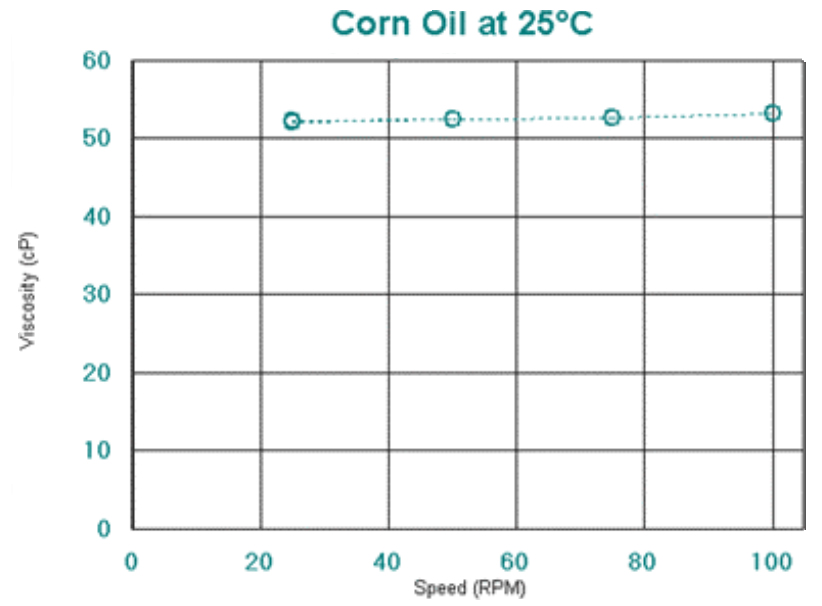
Figure 2: Viscosity vs. Rotation speed
Why do Q-Lab testers require specific calibration radiometers?
How are black panel thermometers calibrated in weathering tests ?
Coating Adhesion Testing in Accordance with ASTM D4541 - Sticky Business
What is the difference between QFS-40 and UVB-313EL lamps?


