Rheological properties of powdered brownie preparations
USE
Baking mix for brownies.
TEST EQUIPMENT
Instrument: powder flow tester (PFT)
Tank: 230 cc, 6 inches in diameter (standard volume)
Lid Type: Pallet Lid, 33cc, 6 inch diameter
Wall cover, 2B finish, 6 inches in diameter
Test Type: Flow Function Test, Wall Friction Test
Temperature: Room temperature (70-72 ° F)
Humidity: 48%
METHOD
A Brookfield powder flow tester equipped with Powder Flow Pro software for automated instrument control and data acquisition was used to test this branded brownie mix. The brownie mixture was poured into the trough and the scraping tool was used to evenly distribute the powder throughout the trough. After recording the sample weight and entering it into the software, a standard flow function test and then a wall friction test were performed. The time required for the watch test was 25 minutes and 13 minutes respectively.
MEASURED PARAMETERS
Fluidity: Very cohesive
Wall friction: 45 ° to 25 °
Apparent density: 475 kg / m3 (filling density) to 660 kg / m3
TO ANALYSE
Hopper shape: Conical
Critical arch dimension: 108.6 mm (4.28 in.)
RESULTS
Figure 1 shows the fluidity of the brownie mixture at different levels of consolidation stress. These results show that the brownie mixture is generally very consistent across the different levels of consolidation stress.
Note: Flow function data is indicated by the red line. When interpreting a flow function graph, the data is read from right to left. The rightmost data point indicates the powder flow rate when the hopper is full; the leftmost data point indicates the powder flow when the hopper is nearly empty. Purple lines are standard flow indices that distinguish different types of flow behavior across levels of consolidation, ranging from “free fluid” (lower segment) to “non-fluid” (upper upper segment).
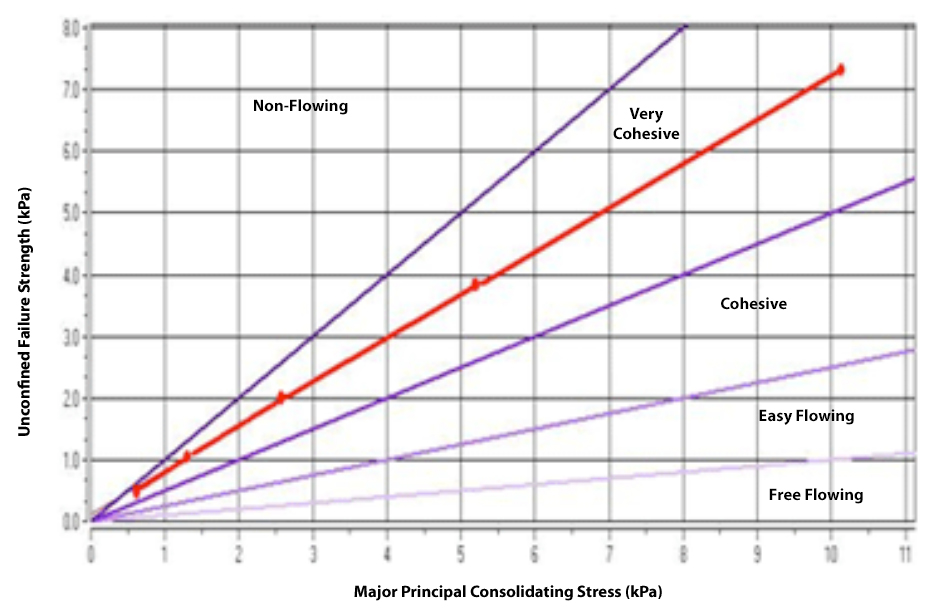
Figure 1: Graph of the compression ratio function of the brownie mix
Figure 2 shows the friction angle of the walls at different levels of normal stress. The wall friction angle represents the friction between the sliding powder and the wall of the hopper or chute at the start of flow. In this test, a stainless steel cover was used, illustrating what the friction would look like if the brownie mixture was in a stainless steel hopper. At a low normal stress of about 0.5 kPa, the wall friction angle is about 45 ° and drops to about 25 ° at higher levels of normal stress (4.75 kPa). Wall friction angles greater than 20 ° are considered high.

Figure 2: Brownie Mix Wall Friction Graph
Figure 3 shows the bulk density of the material at different levels of consolidation stress. This graph tells us that the brownie mix has a filling density of about 475 kg / m³ and amounts to about 660 kg / m³ at about 4.75 kPa of consolidation stress. In general, a free flowing powder will show very small changes in bulk density, while a cohesive or low flowing powder will generally show a large increase in bulk density. This brownie mix shows a large increase in bulk density, which is another indicator that this powder is very cohesive.
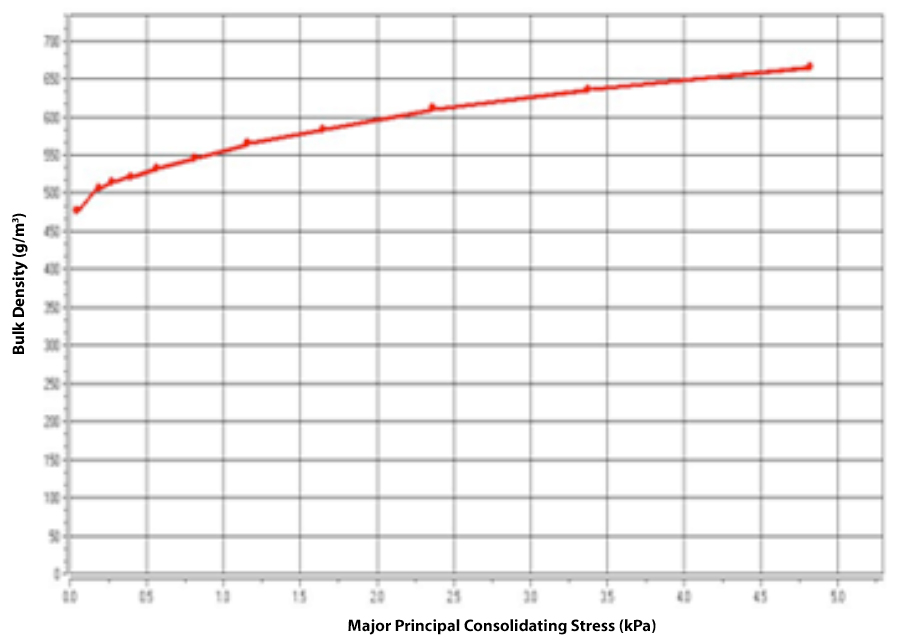
Figure 3: Bulk Density Graph of Brownie Mix
CONCLUSION
The brownie mix is a very cohesive powder at all levels of consolidation stress. This means that the brownie mixture can experience flow issues if the proper precautions are not taken. Possible issues include camber (when powder forms a cohesive bridge over the outlet) and rat hole (when powder only flows out of the center, leaving the rest of the material static against the walls). The critical arch dimension of 108.6 mm (4.28 inches) provides a conservative estimate to prevent arching, provided that the minimum outlet dimension of the hopper exceeds this value. The critical dimension of the rat hole depends on the diameter of the tank. If the diameter of the tank is known, the software can automatically calculate the dimension of the rat hole.