
Wolff-Wilborn pencil hardness device VF2377 / -78 / -79
Used to assess the hardness and resistance of a coating to surface scratches by moving pencils of different hardness on its surface under a constant force at an angle of 45 °.

 AMETEK BROOKFIELD
 ASCOTT ANALYTICAL EQUIPMENT LTD
 ATP ENGINEERING BV
 BINDER GmbH
 BUCKLEYS (UVRAL) LTD
 COATMASTER
 DAKOTA ULTRASONICS
 DEFELSKO CORPORATION
 FORMAT MESSTECHNIK GmbH
 HACH LANGE
 HANGON
 HANNA INSTRUMENTS FRANCE
 HILDEBRAND
 KERN & SOHN GmbH
 LABOMAT ESSOR
 LAUDA
LAUDA
 LENETA COMPANY
 MITUTOYO FRANCE
 Q-LAB CORPORATION
 RHOPOINT INSTRUMENTS
 RK PRINT COAT INSTRUMENTS Ltd
 SIGMUND LINDNER GmbH
 TABER INDUSTRIES
 TAYLOR HOBSON LIMITED
 TESTO
TESTO
 TQC BV
 VEOLIA WATER STI
 VERIVIDE
 WALLACE
 X-RITE EUROPE GMBH
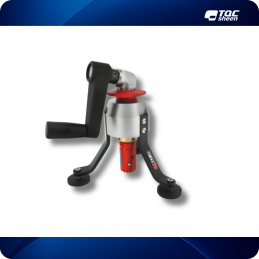
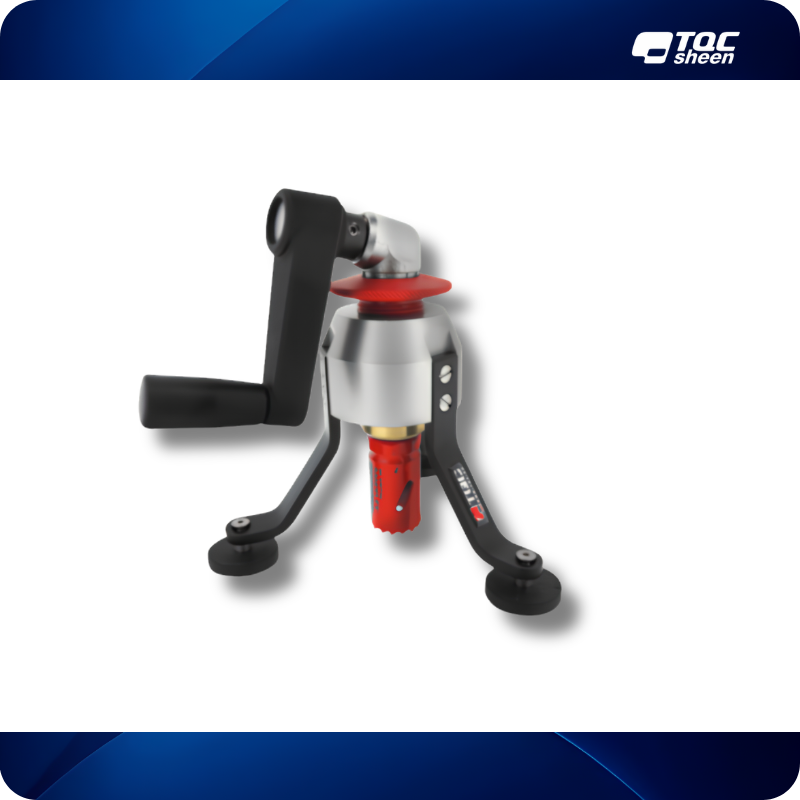
The stud cutting tool is an instrument specially designed to remove adhesive residue around the stud and to cut the loose coating for adhesion tests. Removing too much glue by hand and cutting the loose coating from the substrate is heavy and difficult work especially when inspectors need to perform multiple tests per day. This can cause sore wrists and arms. The stud cutting tool makes the job much easier.
The stud cutting tool is an instrument specially designed to remove adhesive residue around the stud and to cut the loose coating for adhesion tests. Removing too much glue by hand and cutting the loose coating from the substrate is heavy and difficult work especially when inspectors need to perform multiple tests per day. This can cause sore wrists and arms. The stud cutting tool makes the job much easier.
Used to assess the hardness and resistance of a coating to surface scratches by moving pencils of different hardness on its surface under a constant force at an angle of 45 °.
Apparatus used to measure the resistance of paints, varnishes and other organic coatings to abrasion created by the fall of standardized natural silica sand or grains of silicon carbide through a guide tube.
Reference: Jauge multifonction
Multifunction stainless steel gauge for coating inspection.
Precisely measure the rigidity, flexural strength, resilience and elasticity of paper, cardboard, plastics, metal foils, textiles, rubbers, threads, tubes, felts, etc.
Reference: TABER 5770
Floating head abrasimeter designed to quantify abrasion or scratch resistance (optional kit) of flat or 3D parts of all shapes and sizes.
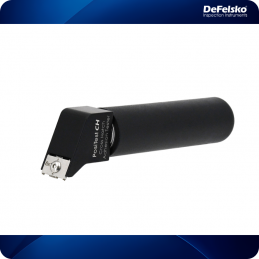
Reference: PosiTest CH
Determines a coating's ability to resist separation from a substrate when a lattice pattern is cut into the coating in accordance with ISO 2409 and ASTM D3359.
Used to measure the resistance to surface abrasion and scratching of materials (plastics, metals, glasses, lenses, etc.) placed in an oscillating tank filled with abrasive (silica sand, Alundum ZF-12 sand, etc.) ).
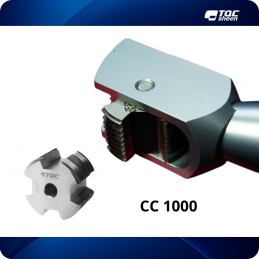
Reference: CC1000 /-2000 /-3000
Simple method of evaluating the adhesion of a paint or a coating to its support by making 2 series of perpendicular incisions and observing the number of squares detached after brushing and application of a standardized adhesive.
Pocket devices for testing the hardness and scratch resistance of flat or curved surfaces (coatings, varnishes, plastics, etc.) carried out using a tungsten carbide tip Ø 1 mm on which is exerted a adjustable pressure.
Reference: TB5000
The CAT Comprehensive Abrasion Test is a universal testing machine for testing the abrasion resistance of coatings on beverage cans and flat materials. The reciprocating motion mimics abrasion damage to coatings during transport in the field. Equivalent to the Gavarti 'GV-CAT' system. The CAT abrasimeter is used for quality control in coating testing...
Universal grooved table Ref. 133336 supplied with 2 pliers. Various plates and optional fixing systems for holding samples (textiles, magnetic strip cards, cables, etc.).
4 models of abrasive tip supports are available: - Wearaser holder in stainless steel (98 g) Ref. 130852 (supplied as standard) - Aluminum Wearaser holder (28 g) Ref. 131852 - Wearaser plastic holder (16 g) Ref. 131852-1 - Wearaser Jumbo holder (43 g) Ref. 131862 (for Wearaser Jumbo Ø ½ ”abrasive tips).
Model dedicated to the abrasion resistance evaluation of seat belts, straps, harnesses, etc. nylon, polyester, leather, polymers and other soft materials.
The standard Wearaser support Ref. 130852 accepts Wearaser Ø ¼ ”abrasive tips (Ø 6.35 mm). Other abrasive tips available: - Wearaser Jumbo Ø ½ ”tips (Ø 12.7 mm, Wearaser Jumbo holder required) - Weardisc Ø ¾ ”discs (Ø 19 mm, universal support required)
The stud cutting tool is an instrument specially designed to remove adhesive residue around the stud and to cut the loose coating for adhesion tests. Removing too much glue by hand and cutting the loose coating from the substrate is heavy and difficult work especially when inspectors need to perform multiple tests per day. This can cause sore wrists and arms. The stud cutting tool makes the job much easier.