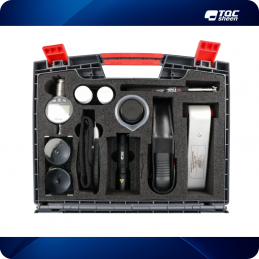
Reference: kits P7315 -7316
Measurement kits before painting SP7315 -7316
Kits made up of a selection of inspection tools and measuring instruments to check the correct preparation of steel surfaces before painting.

 AMETEK BROOKFIELD
 ASCOTT ANALYTICAL EQUIPMENT LTD
 ATP ENGINEERING BV
 BINDER GmbH
 BUCKLEYS (UVRAL) LTD
 COATMASTER
 DAKOTA ULTRASONICS
 DEFELSKO CORPORATION
 FORMAT MESSTECHNIK GmbH
 HACH LANGE
 HANGON
 HANNA INSTRUMENTS FRANCE
 HILDEBRAND
 KERN & SOHN GmbH
 LABOMAT ESSOR
 LAUDA
LAUDA
 LENETA COMPANY
 MITUTOYO FRANCE
 Q-LAB CORPORATION
 RHOPOINT INSTRUMENTS
 RK PRINT COAT INSTRUMENTS Ltd
 SIGMUND LINDNER GmbH
 TABER INDUSTRIES
 TAYLOR HOBSON LIMITED
 TESTO
TESTO
 TQC BV
 VEOLIA WATER STI
 VERIVIDE
 WALLACE
 X-RITE EUROPE GMBH
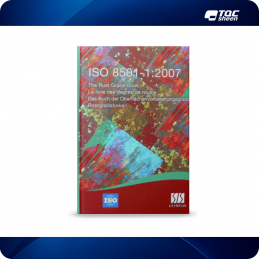
Visual assessment booklets
|
Models |
LD3020 |
LD3027 |
LD3044 |
LD3045 |
|
Entitled |
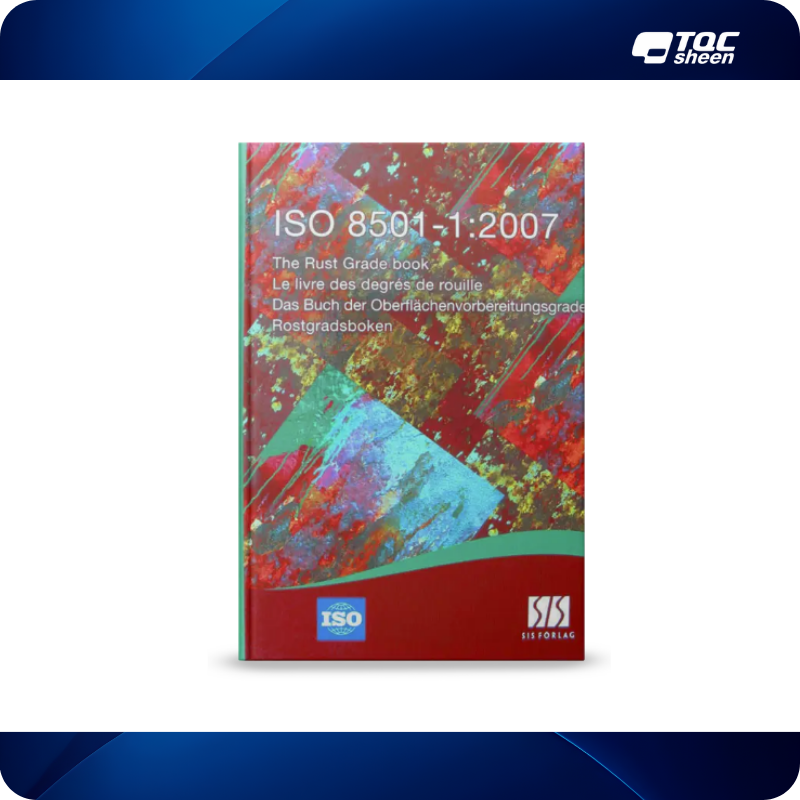
Degrees of rust and preparation of uncoated steel substrates and |
Preparation degrees previously coated after localized stripping layers |
Degrees of preparation for welds, cutting edges and other areas on steel substrates with imperfections |
Initial surface conditions, degrees of preparation and degrees of rust floret after high pressure water stripping |
|
Description |
Descriptions written in 4 languages (English, French, German and Swedish) |
Descriptions written in English and photos showing examples of degrees of preparation of sanded or sanded surfaces. Indispensable in the case of repairing anti-corrosion paint systems. |
The degrees of preparation given in the book are intended to make substrates with imperfections (including welded and prefabricated substrates) suitable for the application of paint. |
Book in 3 languages (English, French and German) with written descriptions and photos, specifying different degrees of preparation of steel substrates after total or partial stripping with water under high pressure of water-soluble contaminants, rust, previous layers of paint and foreign matter. |
|
Standards |
ISO 8501-1: 2007 SIS 055900 |
ISO 8501-2: 1998 |
ISO 8501-3: 2006 |
ISO 8501-4: 2006 |
|
Models |
LD3055 |
LD3056 |
LD3057 |
LD3058 |
LD3059 |
|
Entitled |
Steel surfaces prepared by dry sandblasting SSPC-VIS 1 |
Degree of rust SSPC-VIS 2 |
Steel surfaces prepared by hand and with power cleaning tools SSPC-VIS 3 |
Steel surfaces SSPC-VIS 4 |
Steel surfaces SSPC-VIS 5 |
|
Description |
Guide in English and Spanish with more than 50 reference photos similar to "Swedish standard" but with final appearance images corresponding to the descriptions of American standards |
Series of 27 color photos and 27 black and white diagrams showing the various degrees |
Series of 43 color photos showing 7 different steel surfaces (4 uncoated and 3 previously coated) before and after manual preparation |
Photos with notes |
Photos with notes |
|
Standards |
SSPC Publication 02-12 |
SSPC Publication 00-08 |
SSPC Publication 04-07 |
SSPC Publication 01-05 NACE 22016 |
SSPC Publication 01-06 NACE 22018 |
|
Models |
LD3061 |
LD3075 |
LD3080 |
|
Entitled |
Atlas Fitz 2 |
Coatings condition |
Practical guide for the inspector |
|
Description |
Reference manual with 300 colored photos describing the problems that could arise and their causes, classified in 5 parts: weld defects, surface conditions, coating defects, microscopy and marine soiling. |
Illustrated guide to assess the condition of tank linings, hold, etc. for the purpose of determining compliance with rules and regulations for the classification of ships. Also includes IACS methodology. |
Describes the different inspection methods that an anticorrosion professional must master with advice, comments and |
|
Models |
LD3015 |
LD3019 |
LD3016 |
LD3017 |
|
Entitled |
Paints & Varnishes Vol. 1 General test methods part 1 |
Paints & Varnishes Vol. 1 General test methods part 2 |
Paints & Varnishes Vol. 2 Raw materials |
Paints & Varnishes Vol. 3 Preparation and protection of steel substrates |
|
Description |
Manuals in English with ISO standards dealing with the performance of paints and varnishes |
|||
|
Standards |
Over 280 ISO standards: ISO 1513, 1514, 1516, 1518, 1519, 1520, 1522, 1523, 1524, 2409, 2431, 2592, |
|||
Reference: kits P7315 -7316
Kits made up of a selection of inspection tools and measuring instruments to check the correct preparation of steel surfaces before painting.
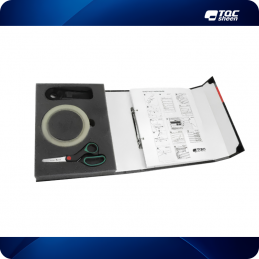
Dust present on stripped surfaces can reduce the adhesion of the coating, causing premature wear and non-conformities by against application specifications. The dust analysis kit is used to assess the quantity and size of dust particles on surfaces prepared for painting.
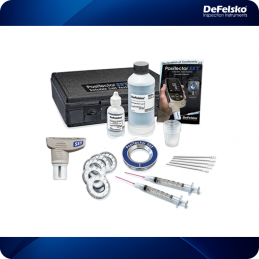
Reference: Kit PosiTest SST
Measures the concentration of soluble salts on metal surfaces.
Assesses the quantity and size of dust particles on blast cleaned surfaces in accordance with ISO 8502-3.
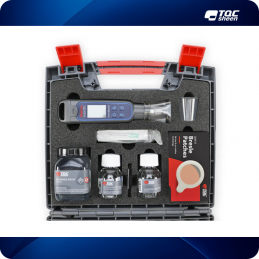
Reference: SP7310
Contamination of surfaces by salts such as chlorides leading to blistering of organic coatings, it is important to ensure the cleanliness of the support by measuring the conductivity, the latter being proportional to the concentration of soluble salts in the solution.
Visual assessment booklets